

Christina DePinto
Senior Product Marketing Manager
We recently released the annual Datadog State of Cloud Security study, which analyzes security posture data from a sample of thousands of organizations that use AWS, Microsoft Azure, or Google Cloud, to uncover emerging trends and security challenges. The results found that although AI-accelerated attacks are redefining the threat landscape and allowing attackers to move at unprecedented scale, there’s nothing novel about the risks they continuously exploit to cause harm.
Vulnerabilities, misconfigurations, and weak identity controls remain persistent sources of risk, and addressing them is still foundational to effective cloud security. The difference now is that security teams must deal with them faster than ever before. As AI puts sophisticated attack techniques in the hands of novice threat actors, detecting active exploitation is becoming increasingly complex. Identifying malicious activity often requires correlating signals across multiple layers of the stack, including application, infrastructure, and runtime telemetry that security teams may not have within their existing security tools.
This acceleration in threats underscores why traditional security controls need more data and context than ever before. A defense-in-depth approach that combines proactive risk reduction with real-time visibility into environments will be the difference between lagging behind attackers and outpacing them.
In this post, we examine best practices that organizations should implement based on the findings, including:
Vulnerabilities in cloud workloads have increased fourfold in under a year
Adoption of cloud-hosted AI inference services brings familiar long-lived credential risk
Supply-chain malware is adding cloud-specific attack mechanisms
Vulnerabilities in cloud workloads have increased fourfold in under a year
The volume of vulnerabilities affecting cloud workloads is increasing dramatically, which has recently been dubbed the Vulnpocalypse. Our research found that cloud applications contained four times as many high- or critical-severity vulnerabilities in November 2026 as they did in February.
This increase creates a significant challenge for security teams. As new vulnerabilities emerge and attackers move faster to exploit them, organizations must contend with growing remediation backlogs and limited resources. Prioritization based on business impact or potential blast radius becomes critical.
Traditional vulnerability prioritization often relies on static severity scores and manually maintained asset tags to determine business criticality. But these approaches can quickly become outdated as applications, infrastructure, and organizational priorities change. Security teams need to prioritize vulnerabilities based on how their environments actually operate instead of how assets are labeled.
How to use Datadog to prioritize and remediate the most business-critical vulnerabilities
By combining vulnerability findings with real-time application and infrastructure context, teams can understand what resources are business-critical crown jewels, whether vulnerable components are running in production, and how a potential compromise could affect operations.
Datadog Cloud Security’s Runtime Prioritization Engine helps teams focus on the risks that matter most by enriching security findings with runtime context from across their environments. Rather than relying exclusively on static severity scores or manually maintained asset inventories, Datadog automatically infers criticality from observability data such as APM trace flow, service dependencies (fan-in), SLOs, traffic, and incidents.
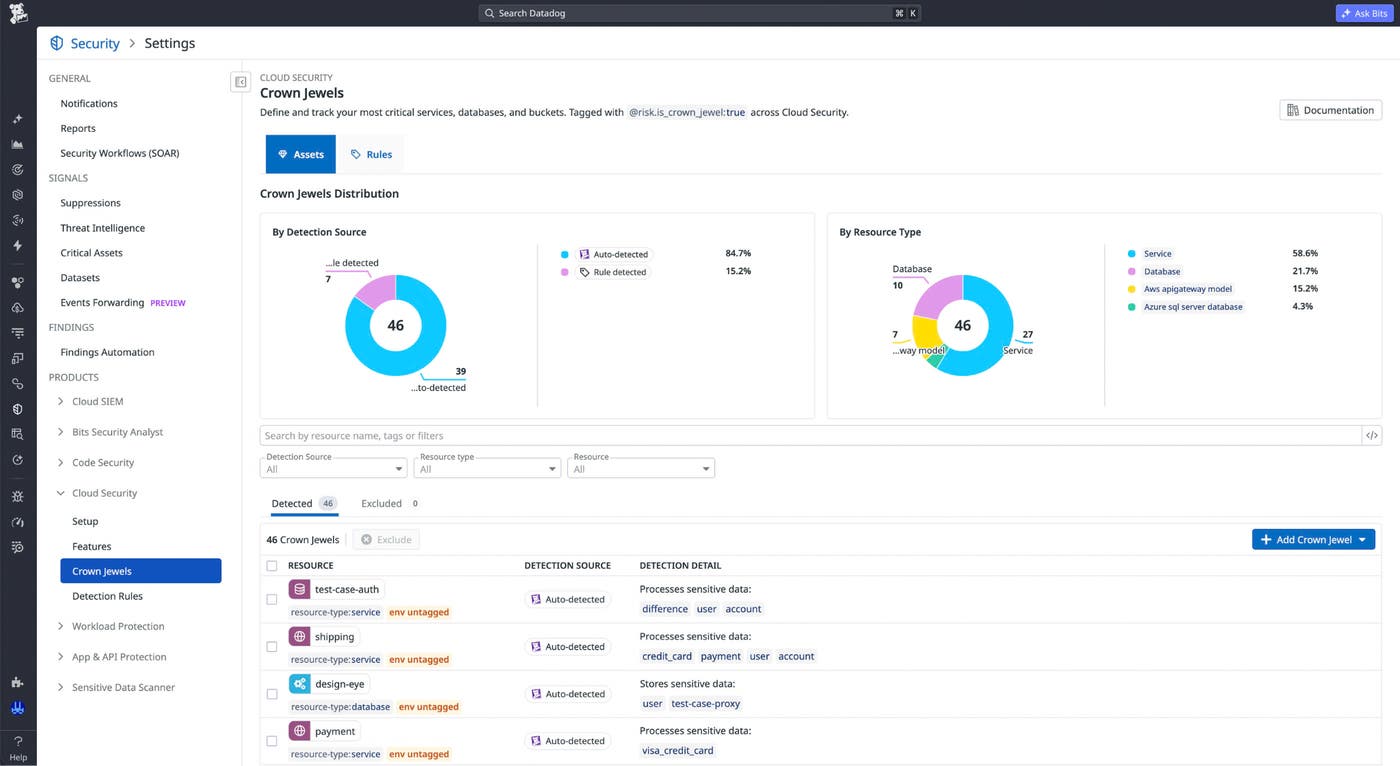
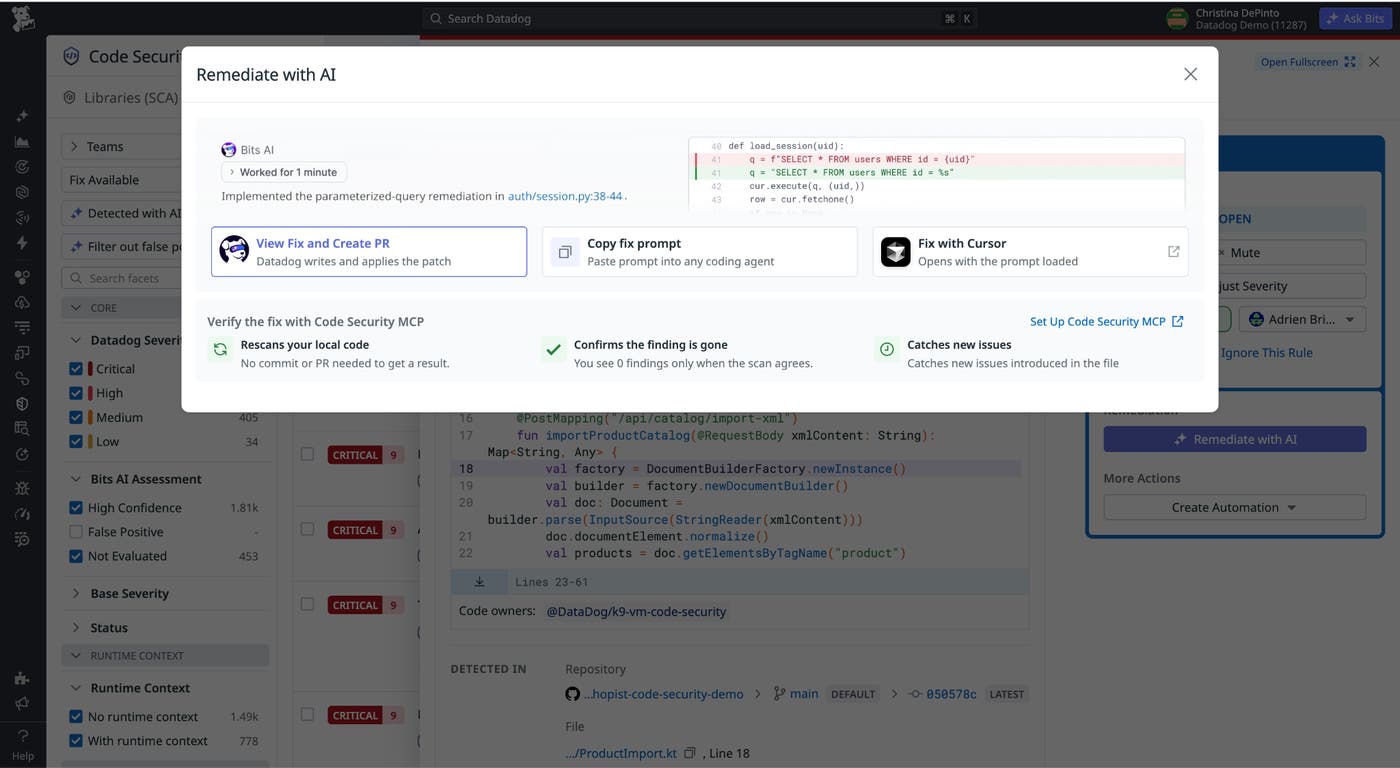
Prioritization is only part of the challenge, however. As vulnerability volumes continue to grow, security teams also need ways to accelerate remediation. By integrating security findings with developer workflows and AI-assisted remediation capabilities such as Bits Code, organizations can reduce the manual effort required to investigate and address vulnerabilities and shrink their backlog.
Adoption of cloud-hosted AI inference services brings familiar long-lived credential risk
As organizations accelerate their adoption of cloud-hosted AI services, they’re introducing new opportunities for attackers to exploit one of the most persistent cloud security weaknesses: long-lived credentials.
Our research found that more than one in five organizations use cloud-hosted AI inference services, yet reliance on long-lived credentials varies widely. Nearly half of Gemini users authenticate with long-lived API keys, compared to just 17% of Amazon Bedrock users. In Azure, 97% of organizations retain the default configuration, leaving long-lived Azure Foundry keys available for authentication.
Long-lived credentials, excessive permissions, and insecure configurations have long been sources of cloud security risk, and AI infrastructure is no different. The lesson for security teams is straightforward: AI infrastructure requires the same identity security fundamentals as the rest of the cloud environment.
How to use Datadog to identify and reduce risks from long-lived credentials
Organizations should prioritize short-lived, identity-based authentication over static API keys wherever supported, enforce least-privilege access, and continuously monitor AI services for risky configurations and potential exposure.
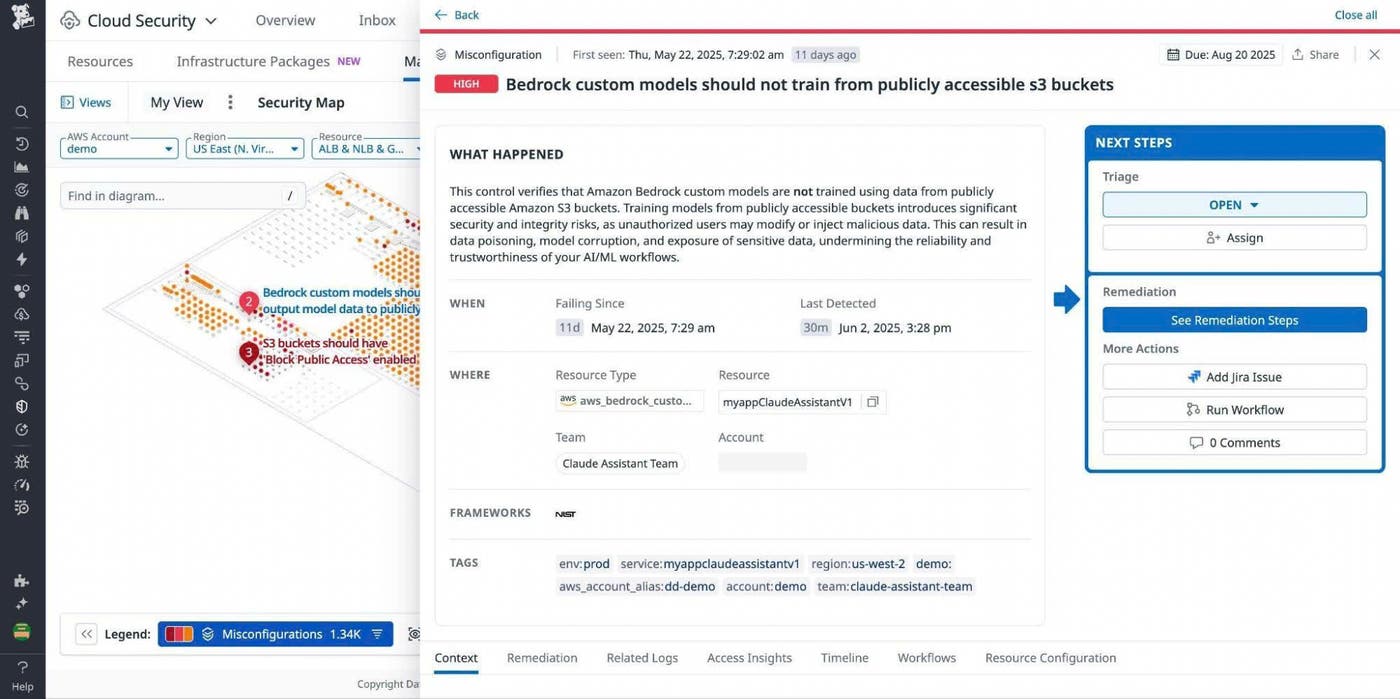
Datadog helps organizations identify risky credentials, excessive permissions, and misconfigurations across their cloud environments, including for AI services such as Amazon Bedrock. With purpose-built security detections for Amazon Bedrock, teams can identify long-lived API keys, help enforce credential hygiene, and detect suspicious activity that may indicate credential misuse. By combining these findings with broader cloud security and observability context, teams can prioritize and remediate risks before they lead to compromise.
For example, Datadog provides out-of-the-box rules to detect:
Long-lived credentials: Creation of new Amazon Bedrock long-term access key with no expiration date
Aging credentials: Amazon Bedrock long-term API keys should be rotated every 90 days or less
Suspicious credential activity: Amazon Bedrock model discovery probing with a long-term access key
Supply-chain malware is adding cloud-specific attack mechanisms
Software supply-chain attacks can spread rapidly through the packages that applications rely on. As developers adopt the newest package versions by default, compromised packages can move from developer environments into CI/CD pipelines and production workloads before security teams have time to respond.
Our research illustrates how quickly new software enters cloud environments:
60% of organizations run dependency versions released less than 24 hours earlier.
21% of cloud applications contain these recently released versions.
Cloud application workloads contain an average of 149 software dependencies, more than half of which are transitive dependencies that developers may not realize their applications use.
Newly released package versions are not inherently dangerous. But their rapid adoption creates an opportunity for compromised releases to spread before they are identified as malicious. The large number of transitive dependencies in modern applications makes this risk harder to manage because developers may not know which packages have entered their applications or which direct dependency introduced them.
Attacks such as Shai-Hulud 2.0 demonstrate that the consequences can extend beyond application code. Malicious packages can steal credentials, compromise development workflows, spread to additional packages, and provide attackers with access to cloud infrastructure.
How Datadog helps secure the software supply chain
Organizations need controls that address supply-chain risk both before packages are installed and after dependencies enter their applications.
Datadog Supply Chain Firewall helps prevent known-malicious open source packages from entering development environments. It inspects supported package-manager commands and can block malicious packages before they are installed on developer machines or in CI/CD workflows. It can also warn developers about potentially risky packages, including newly published versions, and enables security teams to manage allowlists, blocklists, and policies centrally.
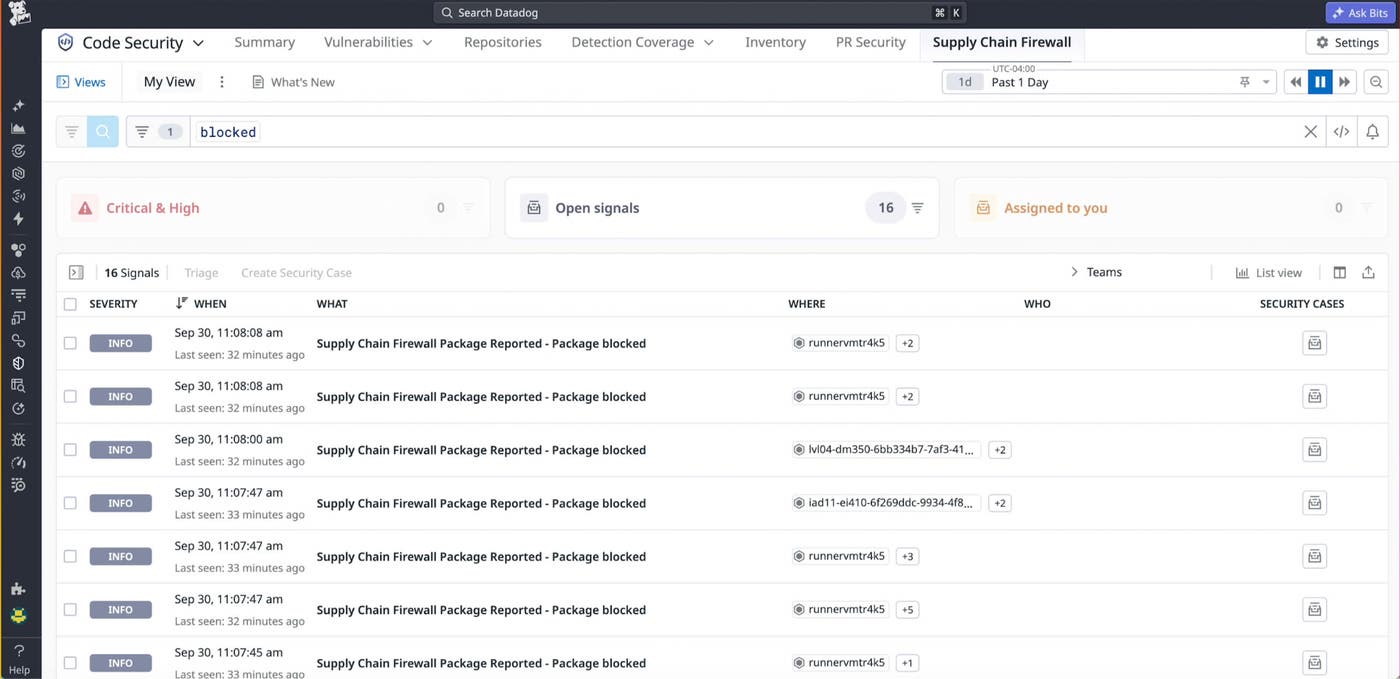
Installation-time protection is only one layer. A package may appear safe when installed and later be identified as malicious. Datadog Code Security can reevaluate recorded package installations against updated threat intelligence and show security teams which developer machines and CI workflows may be affected.
For dependencies already present in an application, Datadog Software Composition Analysis (SCA) identifies vulnerable libraries across repositories and running services. When a vulnerability is found in a transitive dependency, Datadog SCA shows the vulnerable library and version, the direct dependency that introduced it, and where it was detected. It also recommends an upgrade path, which may involve updating the direct dependency to remove the vulnerable transitive library.
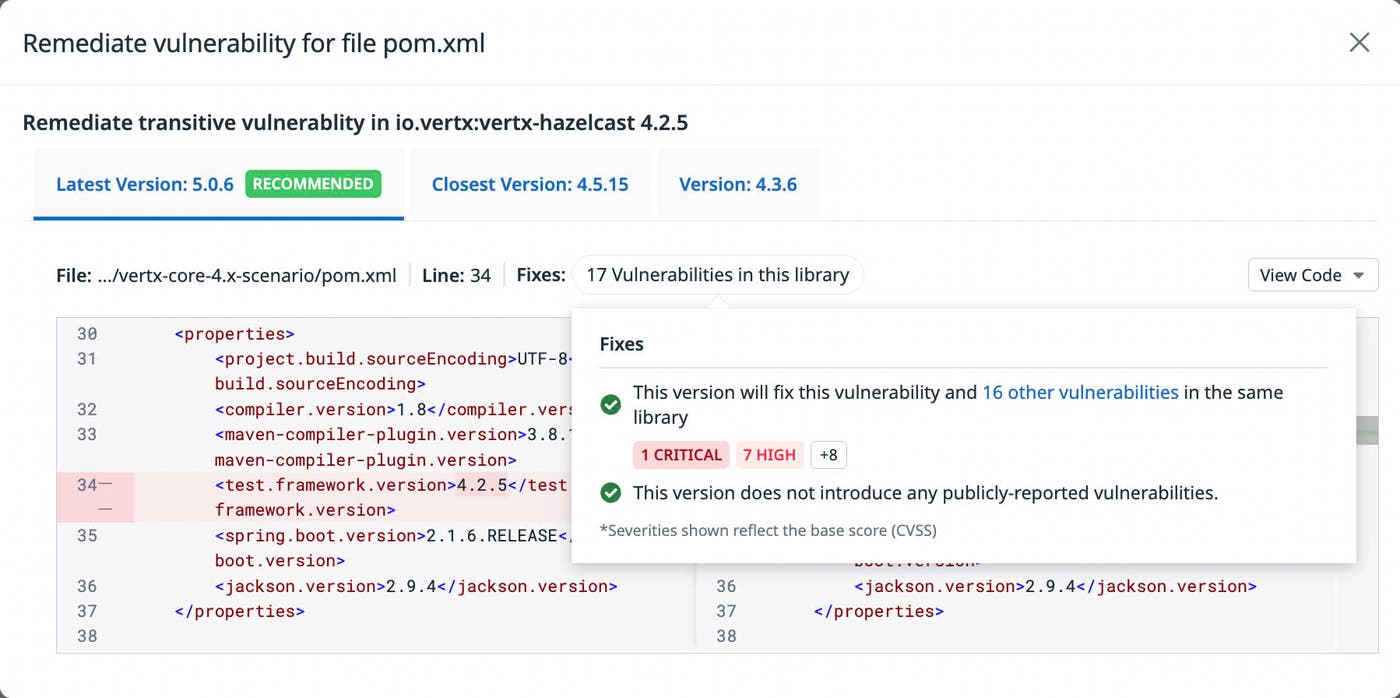
By combining visibility into application code with runtime context, Datadog helps teams identify vulnerable dependencies that are actually loaded in production, prioritize the risks most likely to affect their applications, and focus remediation where it matters most.
Build a stronger cloud security strategy in the AI era
The findings from this year’s State of Cloud Security report reinforce an important reality: AI is changing how quickly attackers can exploit weaknesses, but the fundamentals of cloud security remain essential. Reducing vulnerabilities, enforcing least-privilege access, and securing the software supply chain are not new priorities. What has changed is the need to execute these practices at greater speed and scale.
To keep pace, organizations need to move beyond disconnected security findings and manual remediation processes. By bringing security and observability data together, teams can understand how their environments operate, prioritize risks based on real-world impact, and accelerate detection and response.
Explore the full 2026 Datadog State of Cloud Security report and read our documentation to learn more about Datadog Security.
If you’re new to Datadog, get started with a 14-day free trial.
